POST-MORTEM: Empty Stands, Rented Crowds, and the Jos APC Rally Walkout
By Charles Ejoh
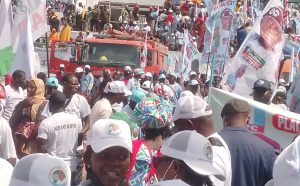
When supporters packed the Jos International Stadium along Zaria Road early Saturday morning in a vibrant, carnival-like atmosphere, the All Progressives Congress (APC) North Central rally looked poised to be a major political show of strength. Five hours later, that momentum had completely evaporated, leaving behind empty terraces, a visibly displeased Vice President on stage, and a convoy pelted with stones at the exit gates.
What unfolded in Jos goes far beyond poor event planning. It exposed deep fault lines in political mobilization, public trust, and governance priorities on the Plateau.
The Price of a Five-Hour Delay—and a “Rented” Crowd
Scheduled for 10:00 a.m., the rally kept thousands of attendees waiting under the sun for roughly five hours before the President and the First Lady finally arrived. In Nigerian politics, delayed arrivals are not uncommon, yet the reaction at the Zaria Road Stadium was unusually swift and unforgiving.
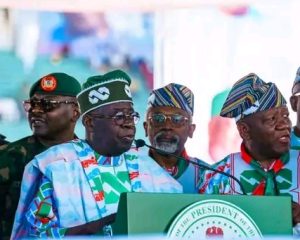
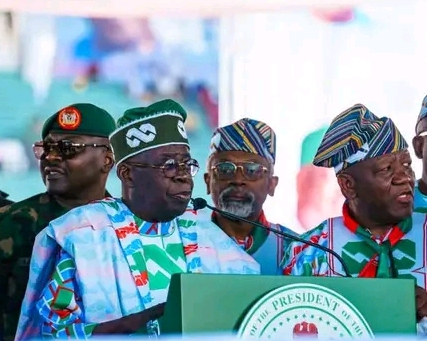
Almost as soon as the presidential convoy entered the arena, large sections of the crowd began streaming toward the exits. By the time the Senate President, Governor Caleb Mutfwang, and former Plateau State Governor Joshua Dariye wrapped up their remarks and the President mounted the podium, he was speaking to largely deserted stands.
While party loyalists like Isa Abubakar from Wase Local Government Area openly blamed sheer exhaustion—describing the long wait as “stressful and uncalled for”—observations inside the bowl told a deeper story. Many supposed party faithful were seen discarding party paraphernalia and walking out even before the speeches began, reinforcing widespread suspicions that a substantial portion of the crowd had been rented for the occasion rather than drawn by genuine political conviction. When transactional mobilization meets a five-hour delay, loyalty quickly runs out.
Missed Opportunities and Misread Sensibilities
The Vice President’s unmistakable displeasure on the podium, triggered by the commotion in the terraces and the thinning crowd, underscored just how badly the optics had unraveled. Things deteriorated further outside the venue, where angry crowds booed and stoned the presidential convoy as it departed.
Beyond the logistics, the substance of the President’s message also struggled to land. Using the campaign podium to apologize for failing to visit affected communities during his previous trip following violent crises in Plateau State struck many observers as tone-deaf. To critics, offering condolences on a rally stage—rather than visiting grieving communities directly—suggested an eye on votes rather than genuine empathy.
As our organization, the Global Center for Media and Human Empowerment (GCMHE), noted in its post-event assessment, the rally came across as a “charade.” The President missed a golden opportunity to sell his agenda, delivering a speech that was disoriented, lacking focus, and full of false promises, while sounding disconnected from the daily realities of Plateau residents.
Governance Priorities Under Scrutiny
The fallout from Saturday’s rally has not spared the Plateau State Government either. While Governor Mutfwang used his remarks to appeal for federal intervention to reconstruct the dilapidated Jos International Stadium, residents and civil society groups have turned the spotlight on the state’s own spending.
Many citizens are questioning why the state government rushed to execute a hasty, last-minute facelift on the long-neglected Zaria Road facility—committing massive financial resources to a one-day political spectacle—at a time when ordinary residents are grappling with severe economic hardship. Furthermore, the President’s failure to commit to a full reconstruction of the stadium left the state with hefty expenses and little to show in concrete federal promises.
Silence from the Top
Inquiries sent via text and WhatsApp to the Plateau State APC Chairman,Rufus Bature, the Plateau State Commissioner for Information,Mrs.Joyce Remnap and the Special Adviser to the President on Media and Public Communication, Sunday Dare, regarding the walkout, the convoy attack, the rented-crowd allegations, and the stadium expenditure went unanswered as of press time.
Ultimately, that silence mirrors the disconnect witnessed inside the Zaria Road Stadium on Saturday. The Jos rally was meant to project unity and dominance in the North Central zone; instead, it served as a stark reminder that rented crowds, rushed facelifts, and late apologies are no substitute for genuine connection with an electorate enduring hard times.
About the Author:
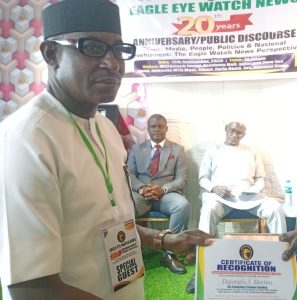
Charles Ejoh is the Global Editor of Eagle Eye Watch News (EEWN) and Chairman, Board of Trustees, Global Center for Media and Human Empowerment (GCMHE), Jos. He can be reached via email at ejohco@gmail.com or WhatsApp at 09033227058.